
Skin Changes May Help Predict Rash Risk in Cancer Patients Receiving Immunotherapy
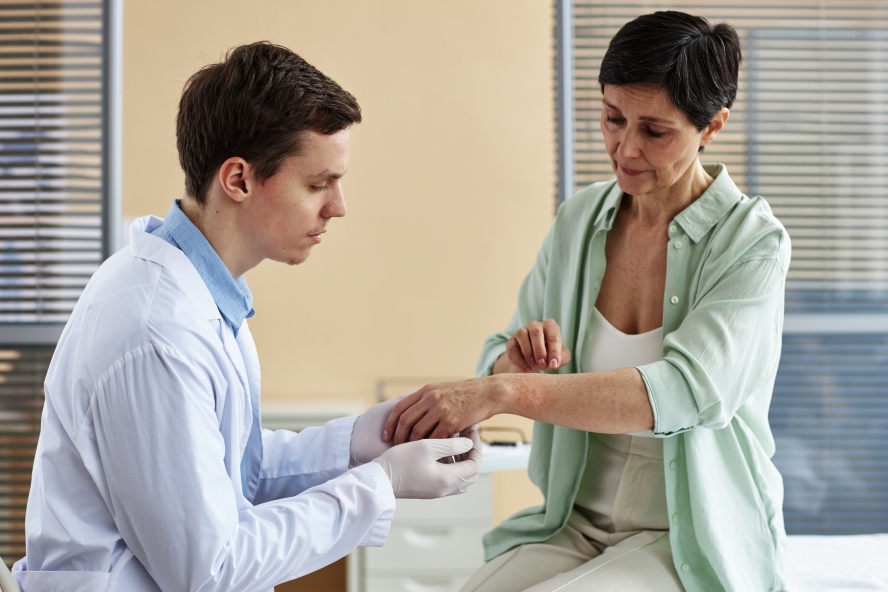 DENVER - Researchers at National Jewish Health have identified changes in the skin of cancer patients before they begin immunotherapy treatment. These skin changes may help predict who will later develop treatment-related skin rashes. The findings could eventually help clinicians identify patients who need closer monitoring and prevent side effects that can disrupt cancer treatment.
The study, published in Allergy, examined patients receiving immune checkpoint inhibitor therapy, a type of immunotherapy that helps the immune system recognize and attack cancer cells. While these therapies have transformed treatment for many cancers, they can also cause immune-related adverse events when the activated immune system attacks healthy tissue. Studies estimate that up to 50% of individuals treated with checkpoint inhibitors develop skin rashes, some of which are debilitating.
“Checkpoint inhibitor therapies can be extremely effective, but skin reactions can affect a patient’s quality of life and, in more serious cases, interfere with their ability to continue treatment,” said Taras Lyubchenko, PhD, first author of the study and a researcher at National Jewish Health. “Our findings suggest there may be measurable differences in the skin even before treatment begins that can tell us which patients are more likely to develop these reactions.”
Researchers prospectively studied 22 oncology patients, collecting tape strip skin samples and blood before patients began checkpoint inhibitor therapy and again six weeks after treatment started. Patients were followed for six months to determine whether they developed immune-related cutaneous adverse events. Ten of the 22 patients developed skin reactions.
The researchers found abnormalities in ceramides, lipids that are essential to maintaining the skin’s protective barrier, in patients who later developed skin reactions. Importantly, those differences were already present before the patients received their first checkpoint inhibitor treatment and became more pronounced after therapy began.
Six weeks after treatment started, researchers also detected increases in several inflammatory proteins, or cytokines, in the skin of patients who later developed skin reactions. Those same inflammatory changes were not detected in the patients’ blood, suggesting that examining the skin itself may reveal early warning signs that standard blood testing could miss.
The study used skin tape stripping, a minimally invasive technique in which adhesive strips are applied to the surface of the skin to collect cells, lipids and proteins for analysis.
“The skin is an accessible organ, and tape stripping gives us a relatively simple way to examine what is happening at the molecular level without a biopsy,” said Donald Y.M. Leung, MD, PhD, distinguished professor of pediatrics, director of the Laboratory of Allergy and Immunology at National Jewish Health and the senior author of this study. “Being able to identify patients at increased risk before they develop symptoms could ultimately allow clinicians to monitor them more closely and intervene earlier.”
Researchers emphasize that the study was small and that larger studies are needed to validate the findings and determine how the skin biomarkers could be incorporated into clinical care. However, the results provide new insight into why some patients develop immune-related skin reactions and point toward a potential strategy for predicting and eventually preventing treatment-limiting side effects.
“These findings give us a better understanding of what may be happening in the skin before a reaction becomes clinically apparent,” said Elena Goleva, PhD, professor at National Jewish Health and an author of the study. “With further research, we hope this could lead to earlier identification and closer monitoring of patients who are most at risk.”
National Jewish Health is the leading respiratory hospital in the nation delivering excellence in multispecialty care and world class research. Founded in 1899 as a nonprofit hospital, National Jewish Health today is the only facility in the world dedicated exclusively to groundbreaking medical research and treatment of children and adults with respiratory, cardiac, immune and related disorders. Patients and families come to National Jewish Health from around the world to receive cutting-edge, comprehensive, coordinated care. To learn more, visit njhealth.org or the media resources page.
Media Resources
We have many faculty members, from bench scientists to clinicians, who can speak on almost any aspect of respiratory, immune, cardiac and gastrointestinal disease as well as lung cancer and basic immunology.
Media Contacts
Our team is available to arrange interviews, discuss events and story ideas.
- Jessica Berry
303.398.1082 office
303.807.9491 mobile
berryj@njhealth.org - Adam Dormuth
303.398.1002 office
970.222.5034 mobile
dormutha@njhealth.org