
Does Sleep Apnea Raise Your Risk of Dementia
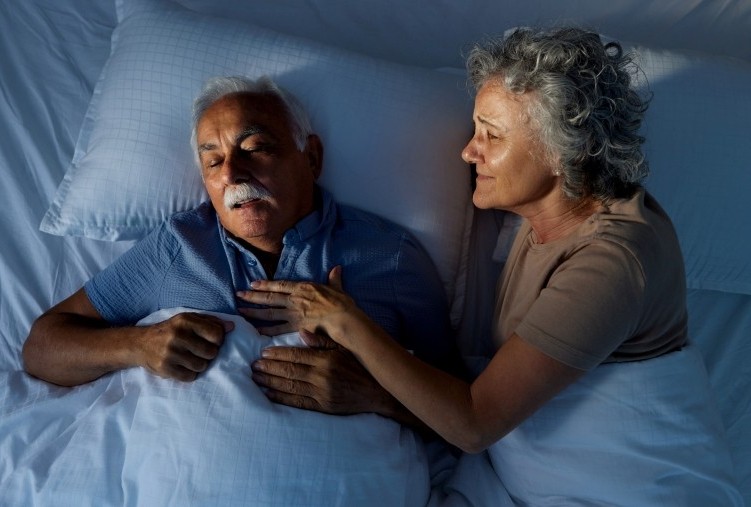 After a sleepless night, it’s normal to feel a little foggy. Names can be harder to recall. Your concentration may slip. Even simple tasks may require more effort. For people with untreated sleep apnea, however, these restless nights and sluggish days can happen over and over, sometimes for years. And this link between sleep apnea and cognitive performance has raised an important question: Could sleep apnea contribute to dementia?
The answer isn’t simple. Researchers know that sleep apnea can affect memory, concentration and other aspects of brain function. But they have not established that sleep apnea directly causes Alzheimer’s disease or other forms of dementia.
“We say that sleep apnea may be a contributing factor to neurodegeneration,” said neurologist Misbah Azeem, MD. “But we haven’t discovered the direct link between sleep apnea and dementia yet.”
In other words, while someone shouldn’t assume they’re going to get dementia after being diagnosed with sleep apnea, they also shouldn’t take their diagnosis lightly. Sleep apnea can have a significant impact on your cardiovascular health, daytime functioning and quality of life, with researchers still uncovering ways this condition affects the brain.
What Happens to the Brain During Sleep Apnea?
Obstructive sleep apnea (OSA) occurs when the airway repeatedly closes or becomes blocked during sleep. Breathing can stop temporarily, oxygen levels may fall and the brain repeatedly has to interrupt sleep to restore normal breathing. This sometimes results in a person with OSA waking up in the middle of the night, gasping for air (Opens in a new window).
There are several ways researchers think this cycle could potentially affect brain health. One is intermittent hypoxia, or repeated periods of low oxygen. “Your oxygen levels are up and down because the airway is closing and opening over and over,” explained sleep specialist Chafen Hart, MD. “This can cause cells to experience oxidative stress and inflammation.” In people with severe sleep apnea, these effects happen repeatedly over long periods of time.
The sleep disruption caused by OSA is also a factor. Untreated apnea fragments sleep and can reduce both deep sleep and REM sleep. Scientists have been studying how these stages of deep sleep help the brain clear waste products that accumulate during our waking hours.
According to Dr. Azeem, researchers have hypothesized that by disrupting stages of deep sleep, you’re interfering with the removal of proteins such as beta amyloid and tau, which are closely associated with Alzheimer’s disease. If fragmented sleep interferes with that clearance process, researchers theorize it could potentially contribute to the changes occurring in an already vulnerable brain.
However, even though these theories have a strong scientific basis, they don’t amount to definitive proof that sleep apnea causes dementia.
Dr. Hart pointed to research (Opens in a new window) suggesting untreated sleep apnea may be associated with about a 34% higher risk of all-cause dementia. But proving that treating sleep apnea eliminates that additional risk is difficult. The necessary studies would have to follow large groups of people for many years, potentially into their 70s and 80s.
What Doctors Do Know
While the long-term dementia question remains unsettled, doctors have a much clearer understanding of sleep apnea’s short-term cognitive effects.
People with moderate or severe untreated sleep apnea may experience brain fog, difficulty concentrating and problems processing new information. Some people do not even recognize how impaired they feel until treatment improves their sleep. Dr. Hart recalled that patients sometimes report that they never realized how groggy they had been until their apnea was treated and they experienced greater clarity during the day.
Dr. Azeem has observed a similar dynamic in his patients. “You may have mild cognitive impairment in patients who come in with sleep apnea,” said Dr. Azeem. “You tell them to start using their CPAP machine, and they get better. They feel more rested. They feel like they're a little bit sharper. The other side of that is that people who have untreated sleep apnea and a neurodegenerative condition, such as dementia. For them, their sleep apnea tends to ‘unmask’ their dementia by making the symptoms worse.”
For that reason, sleep is one of the first things Dr. Azeem evaluates when a patient presents with cognitive issues.
Don’t Ignore the Signs
While the long-term science hasn’t yet uncovered its exact link to dementia, there are already plenty of established reasons to address sleep apnea
Untreated sleep apnea can increase your risk of cardiovascular disease and stroke, particularly when the condition is moderate or severe. Dr. Hart noted that repeated nighttime breathing interruptions can also contribute to high blood pressure, heart rhythm problems and strain on the heart.
Common warning signs include loud snoring, waking up while choking or gasping, morning grogginess and excessive daytime sleepiness. Partners are often the first to notice something is wrong, although Dr. Hart cautioned that not everyone with significant sleep apnea snores.
“There are people who don't snore and are pretty quiet when they sleep who will still have sleep apnea when we run tests,” she said. “Sometimes it surprises us.”
Testing is the best way to determine whether apnea is present and how severe it is. The treatment depends on the individual, but CPAP remains the most effective option for many patients. Oral devices that reposition the jaw may help some people, while other therapies and surgical implants are appropriate for selected cases.
Whether treating sleep apnea today will prevent dementia decades from now remains an unanswered question. But better sleep can still have an immediate effect on how the brain functions.
“Ultimately, if you don't sleep well, your brain can't work well,” Dr. Hart said. Or, as Dr. Azeem put it, “Don't sleep on your sleep apnea.”