
Lung Scans Can Reveal Important Differences in Sarcoidosis Severity According to New Study
Findings may help doctors better predict disease course and tailor care
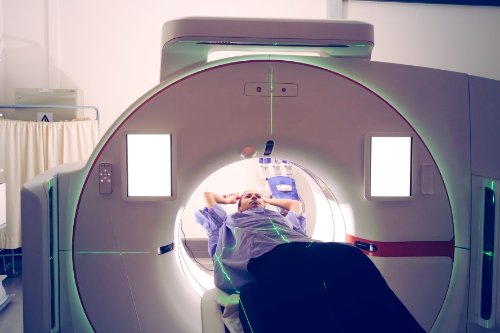 DENVER - A new study from researchers at National Jewish Health and collaborating institutions has found that different patterns seen on lung scans can signal how severe sarcoidosis may be, and how it affects breathing. The research was published online. in the journal CHEST.
Sarcoidosis is a disease that causes inflammation in different parts of the body, most commonly the lungs. While some people have mild symptoms or even normal lung function, others develop lasting lung damage, known as fibrosis, that can make breathing more difficult.
In a large study of more than 900 patients, researchers analyzed high-resolution CT scans alongside breathing tests. They grouped patients into three categories: those with fibrotic (scarred) lung disease, those with non-fibrotic abnormalities and those with no visible lung damage. The results showed clear differences.
Patients with fibrotic sarcoidosis were generally older, had lived with the disease longer and had significantly worse lung function compared to those in the other groups. Nearly two-thirds of patients with fibrosis had abnormal breathing tests, compared to about one-third of those without fibrosis.
“Not all sarcoidosis is the same,” said Lisa Maier, MD, chief of the Division of Environmental and Occupational Health Sciences, head of the World Association of Sarcoidosis and Granulomatous Disease Sarcoidosis Center of Excellence at National Jewish Health and co-senior author of the study. “By looking closely at CT scans, we can begin to identify which patients are at higher risk for more serious lung impairment, specific types of lung function abnormalities and may need closer monitoring or different treatment approaches.”
The study also found that specific patterns within fibrotic disease matter. Patients with large clusters of lung scarring, called “conglomerate masses,” were much more likely to have a combination of restrictive and obstructive lung problems, a more complex and potentially severe form of impairment.
“These imaging patterns give us valuable clues about what’s happening in the lungs,” said David Lynch, MB, radiologist at National Jewish Health and co-senior author. “They help us connect what we see on scans with how well a patient’s lungs are actually functioning.”
Importantly, many patients without fibrotic changes had normal or only mildly affected lung function, highlighting the wide variability of sarcoidosis. The researchers say these findings could help improve how doctors classify sarcoidosis and guide treatment decisions. Currently, clinical guidelines do not even indicate the need for CT scans for evaluation of patients with pulmonary sarcoidosis, let alone the scans’ role in distinguishing between fibrotic and non-fibrotic forms of the disease.
“Better defining these subtypes is an important step toward more personalized care,” added Dr. Maier.
The team hopes future studies will build on these findings to predict outcomes better and identify which patients may benefit from earlier or more targeted care and therapies.
National Jewish Health is recognized by the World Association for Sarcoidosis and Other Granulomatous Disorders (WASOG) as a Center of Excellence for Sarcoidosis. National Jewish Health has held this designation since 2017 and was one of the first 25 WASOG Sarcoidosis Clinics worldwide.
National Jewish Health is the leading respiratory hospital in the nation delivering excellence in multispecialty care and world class research. Founded in 1899 as a nonprofit hospital, National Jewish Health today is the only facility in the world dedicated exclusively to groundbreaking medical research and treatment of children and adults with respiratory, cardiac, immune and related disorders. Patients and families come to National Jewish Health from around the world to receive cutting-edge, comprehensive, coordinated care. To learn more, visit njhealth.org or the media resources page.
Media Resources
We have many faculty members, from bench scientists to clinicians, who can speak on almost any aspect of respiratory, immune, cardiac and gastrointestinal disease as well as lung cancer and basic immunology.
Media Contacts
Our team is available to arrange interviews, discuss events and story ideas.
- Jessica Berry
303.398.1082 office
303.807.9491 mobile
berryj@njhealth.org - Adam Dormuth
303.398.1002 office
970.222.5034 mobile
dormutha@njhealth.org