
Study Links Burn Pit Smoke Exposure to Increased Lung Particle Burden in Post-9/11 Veterans
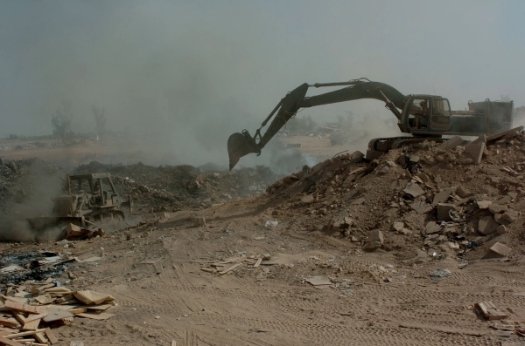 DENVER - A new study led by researchers at National Jewish Health provides quantitative evidence linking burn pit smoke exposure during military deployment to increases in harmful carbon-based particles in the lungs of post-9/11 veterans with distal lung disease.
The study, published in Scientific Reports, analyzed lung tissue from deployed veterans using a novel quantitative microscopy technique that measures particulate matter directly within lung samples. Researchers found that veterans with deployment-related lung disease had significantly higher levels of anthracotic (carbon-based) pigment in their lungs compared to healthy controls, and that this burden was strongly associated with reported exposure to burn pit smoke.
“Burn pits were widely used during post-9/11 military operations, yet linking specific inhalational exposures to long-term lung disease has been challenging,” said Cecile S. Rose, MD, MPH, senior author of the study and a pulmonologist at National Jewish Health. “This study provides objective, tissue-based evidence that burn pit smoke exposure leaves a measurable impact in the lungs that may contribute to disease development.”
Researchers examined surgical lung biopsy samples from 24 post-9/11 veterans with deployment-related lung disease, comparing them with samples from smokers with respiratory bronchiolitis and from healthy controls. Using a validated quantitative microscopy for particulate matter (QM-PM) technique, investigators measured two key indicators of exposure: anthracotic pigment fraction, reflecting retained carbon-based particles from combustion sources, and birefringent dust density, indicating retained silica and silicate particles.
After adjusting for age, veterans (who were mainly non-smokers) with lung disease had anthracotic pigment levels similar to smokers with respiratory bronchiolitis and more than three times higher than healthy controls. Importantly, these higher pigment levels were significantly associated with reported burn pit smoke exposure, but not with sandstorms or diesel exhaust.
“This approach allows us to move beyond self-reported exposure histories and directly measure what remains in the lung tissue,” said Jeremy T. Hua, MD, MPH, lead author of the study. “The strong association between burn pit smoke exposure and anthracotic particle burden is particularly compelling.”
Lung diseases, including bronchiolitis and emphysema, affect the small airways and alveoli and are increasingly recognized among previously deployed service members. While prior studies have identified elevated mineral dust in some veterans’ lungs, this study highlights the potential role of carbonaceous particles from burn pit smoke in disease pathogenesis.
“These findings help clarify how complex deployment-related exposures may translate into lasting lung injury,” Hua said. “They also underscore the importance of continued research, monitoring, and care for veterans experiencing unexplained respiratory symptoms.”
National Jewish Health is the leading respiratory hospital in the nation delivering excellence in multispecialty care and world class research. Founded in 1899 as a nonprofit hospital, National Jewish Health today is the only facility in the world dedicated exclusively to groundbreaking medical research and treatment of children and adults with respiratory, cardiac, immune and related disorders. Patients and families come to National Jewish Health from around the world to receive cutting-edge, comprehensive, coordinated care. To learn more, visit njhealth.org or the media resources page.
Media Resources
We have many faculty members, from bench scientists to clinicians, who can speak on almost any aspect of respiratory, immune, cardiac and gastrointestinal disease as well as lung cancer and basic immunology.
Media Contacts
Our team is available to arrange interviews, discuss events and story ideas.
- Jessica Berry
303.398.1082 office
303.807.9491 mobile
berryj@njhealth.org - Adam Dormuth
303.398.1002 office
970.222.5034 mobile
dormutha@njhealth.org