
Understanding New EpiPen® Guidelines
Severe allergic reactions can escalate quickly, and knowing what to do in the moment can be a challenge. New international recommendations released at the end of 2025 aim to make epinephrine (EpiPen®, AuviQ®, Neffy® and other epinephrine devices) use clearer and less intimidating for people living with serious allergies. According to pediatric food allergists BJ Lanser, MD, and Melanie Bongiovanni, CPNP, the goal of these new guidelines is not to replace judgment, but to offer support so people feel more confident recognizing reactions and use epinephrine earlier when indicated, so that it is most effective.
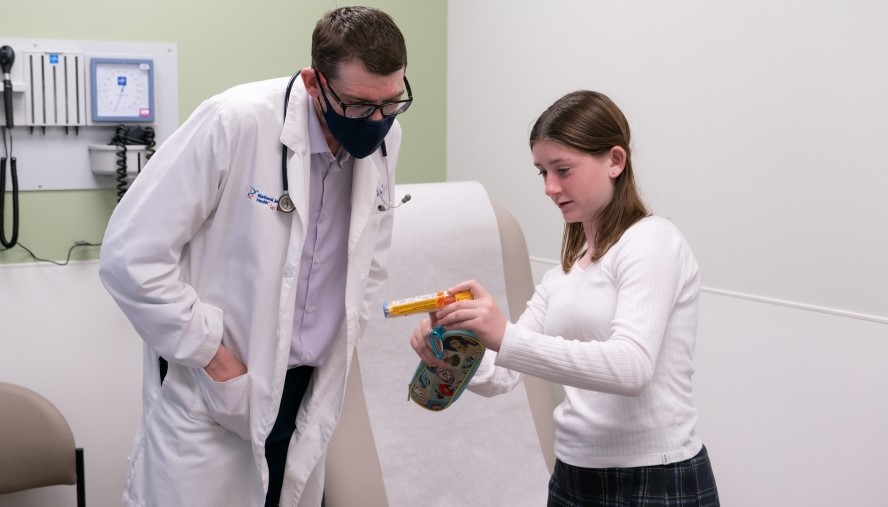
What New Epinephrine Guidelines Mean for You
This slideshow explains what’s changed, why it matters and how guidance may affect real-life decisions for patients, families and caregivers.
Why Is There New Guidance?
If you or your child carries an EpiPen® or another epinephrine device for severe allergies, a new international consensus report is meant to make scary moments less confusing. It pulls expert opinions from seven countries and was published in The Journal of Allergy and Clinical Immunology. Previously, sometimes confusing advice about epinephrine led to underuse, overuse and lots of “just in case” trips to the ER. Researchers hope clearer, symptom-based guidance will help more people treat symptoms appropriately and feel confident about next steps.
Biggest Change: When to Call 911 After Using Epinephrine
For years, people were told that using an EpiPen® or another epinephrine device meant they also needed to call 911 and go to the emergency room. The newer guidance helps clarify that this may not always be necessary. If symptoms improve quickly after the first dose and remain improved, some people may be able to stay at home rather than seek emergency care right away. This option depends on several factors, including having a near-complete and quick response to epinephrine, having a second dose of epinephrine available, and having another person present who can help if symptoms return=. Most importantly, parents need to be comfortable with staying home – if not, then go to the ER. The goal is to balance safety with avoiding unnecessary emergency visits.
Do Not Delay Using Epinephrine – It is First Line, not the Last Resort
Many people hesitate to use epinephrine because they worry about overreacting or using it unnecessarily. The new recommendations are designed to reduce that hesitation. Epinephrine remains the first-line treatment for suspected anaphylaxis, and using it early can stop symptoms from becoming more severe. New guidance emphasizes recognizing patterns of serious allergic reactions, rather than waiting for symptoms to worsen. While nothing can replace informed medical judgment, the message for patients and caregivers is clear: If you think a reaction could be anaphylaxis, it is safer to act promptly than to wait. Learn how to administer epinephrine.
Recognizing Anaphylaxis
Severe allergic reactions do not always follow a clear or predictable pattern. There is no single test that can immediately confirm anaphylaxis, so decisions are often based on symptoms as they appear. The new guidance helps by clarifying which combinations of symptoms across different body systems are most concerning, including breathing problems, feeling weak, dizziness, rapid pulse, nausea and fainting. For people managing allergies, this means you do not need absolute certainty before acting. When symptoms involve more than one part of the body or escalate quickly after exposure to a likely allergen, early treatment with epinephrine is strongly encouraged.
When Emergency Care Is Still the Safer Choice
The updated approach to epinephrine use shouldn’t be interpreted as “stay home no matter what.” Emergency care is still recommended if the reaction is severe, if symptoms do not resolve quickly or if symptoms return or worsen after the first dose. Having a second dose available matters, and so does having another person who can help monitor and give a second dose if needed. Location matters too. Dr. Lanser noted that observation at home assumes “a safe setting,” meaning that there are people present who are aware of your allergic condition and know how to attend to you. He emphasized that this “does not include the school setting.” Distance from care also plays a role, as staying home may be safer when you are already close to a hospital.
What This Means for Families, Schools and Caregivers
For everyday life, these recommendations aim to reduce panic and delayed treatment. They also create clearer expectations for caregivers. Families may be able to discuss with their doctor what “safe observation” looks like for them, instead of defaulting to an ER visit every time. Schools and childcare settings may still need to activate emergency services more consistently, because they are not the same as homes with a parent to continually monitoring their child. As always, it's important to stay in conversation with your allergist, while following your current action plan.