
Respiratory Virus Season Readiness Tips
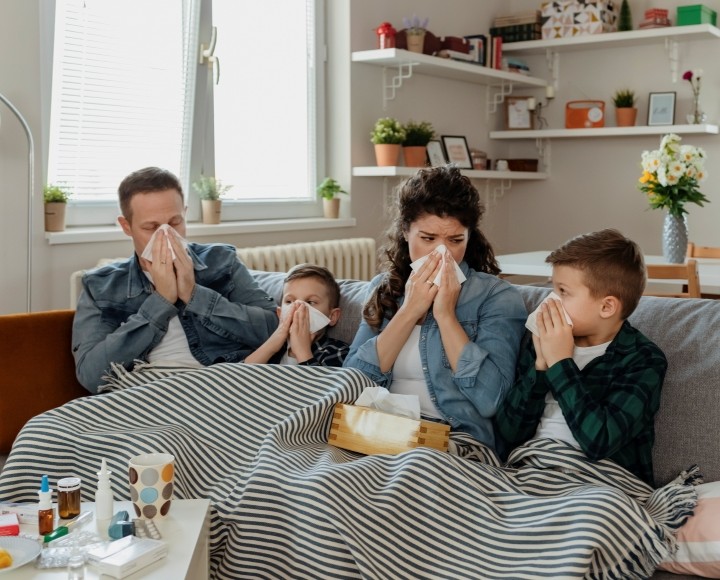 As temperatures drop and people begin spending more time indoors, respiratory viruses begin to make their seasonal comeback. Influenza and respiratory syncytial virus (RSV) tend to increase during the winter. COVID-19 has developed a less predictable pattern, with waves occurring throughout the year. At some point, according to Chief Medical Officer Carrie Horn, MD, several major respiratory viruses may be circulating at the same time.
“We will always see rising flu and RSV in the winter,” said Dr. Horn. “It's just a question of when the COVID surge hits.”
The timing can also vary depending on where you live. In Colorado, for example, Dr. Horn noted that flu commonly peaks later in the winter, often during January and February. Those seasonal patterns help explain why doctors encourage people to prepare before respiratory illnesses become widespread.
Everyday Ways to Lower Your Risk
Again, one of the main reasons respiratory illnesses become more common in winter is because people spend more time together indoors. Being in tightly confined, enclosed spaces makes it easier for viruses to move from person to person.
During this season, according to Dr. Horn, simple precautions can make a big difference. For people who are especially vulnerable to complications, Dr. Horn says wearing a mask in crowded environments is a reasonable option. “If you're someone who's at high risk is perfectly okay to wear a mask when you're out in public,” said Dr. Horn. “Some people are very against that, but it's okay to do it if you're going to be at an airport or on an airplane.”
Good hand hygiene also remains important. Washing your hands or using hand sanitizer after being in public, before eating and before touching your face can help reduce opportunities for transmission.
Of course, vaccination remains one of the most important tools for reducing the risk of serious illness. For most people, Dr. Horn recommends getting a flu vaccine in early to mid-October. This generally provides protection through peak flu season. However, she noted that people with chronic illnesses or a particularly high risk of complications may want to talk with their health care provider about whether earlier vaccination or an additional booster later in the season makes sense.
Vaccines are not a guarantee that someone will avoid infection altogether. Flu vaccines are developed based partly on the strains circulating earlier in the Southern Hemisphere. The match may not always be exact. However, even a vaccine that’s not perfectly aligned with the upcoming season’s strain can still provide meaningful protection.
“People think, ‘Oh, I got the vaccine, I shouldn't get sick at all,” said Dr. Horn. “That's not exactly how vaccines work. The focus is more about reducing the chance of infection and preventing severe complications, hospitalization and death.”
Dr. Horn noted that vaccines are available to protect against RSV as well, although they are not recommended for everyone. Currently, the CDC recommends (Opens in a new window) a single dose for all adults 75 and older and for adults ages 50 to 74 who are at increased risk of severe RSV illness. A maternal RSV vaccine is also recommended (Opens in a new window) during weeks 32 through 36 of pregnancy to help protect infants after birth.
Spotting Differences in Respiratory Viruses
One of the challenges of respiratory virus season is that flu, RSV and COVID can look remarkably similar. All three can cause fever, body aches, congestion, coughing, chest tightness, wheezing and shortness of breath.
“Because of all the potential overlap, it's really hard to tell the difference between the three from a symptom standpoint,” Dr. Horn said.
For generally healthy people with mild symptoms, it may be reasonable to stay home and monitor how the illness progresses. People at higher risk, however, should be quicker to contact a health care provider. That includes people with underlying lung disease, weakened immune systems, uncontrolled diabetes, heart disease or heart failure. For people who are at higher risk, even common respiratory viruses can sometimes lead to complications such as pneumonia.
“The sooner you get to your health care provider to get tested, the sooner we can start treatment and the more effective the treatment will be,” said Dr. Horn.
Protecting Others
Perhaps the simplest precaution you can take during respiratory season is to stay home when you’re sick. If you or someone you planned to visit develops symptoms, Dr. Horn says it is reasonable to postpone a gathering, miss work when possible or make plans for another day.
“It's okay to prioritize health and reschedule,” said. Dr. Horn,
Respiratory viruses are a recurring part of life, particularly during the colder months. But vaccination, good hygiene, early testing for people at higher risk and a willingness to stay home when sick can all help reduce the chances that a seasonal infection becomes something more serious.