Living with Pediatric Vocal Cord Dysfunction (VCD)
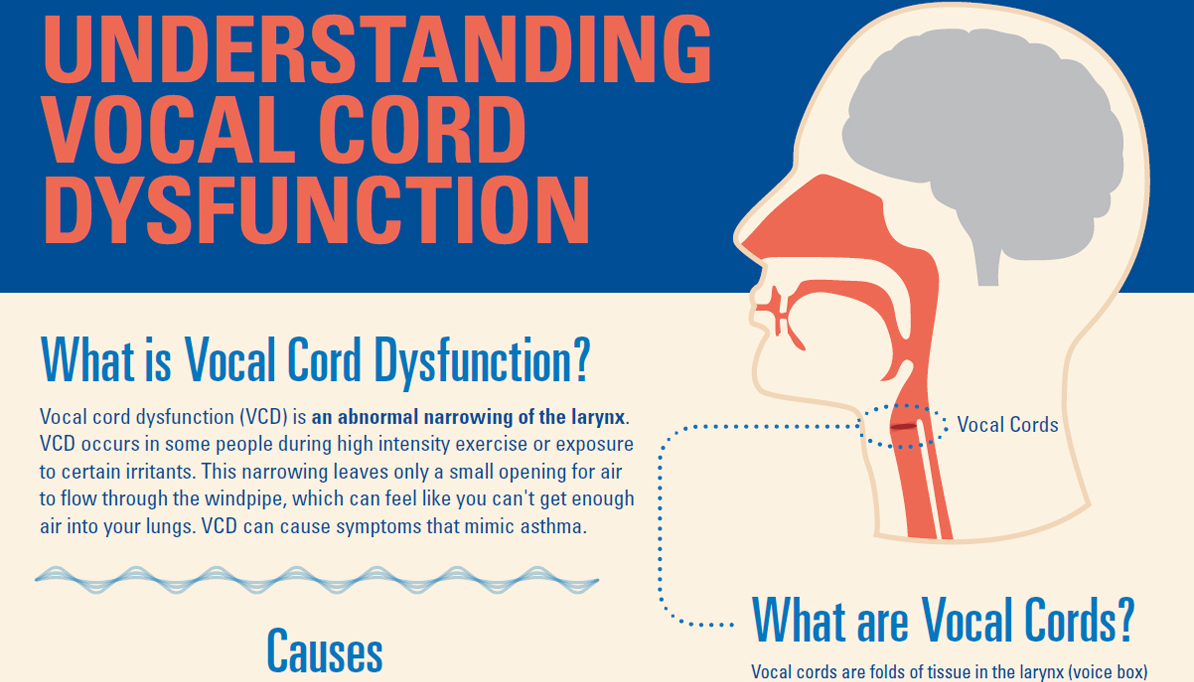
 Pediatric Vocal Cord Dysfunction (VCD) is often mistaken for asthma because both conditions produce similar symptoms. With VCD, vocal chords tighten or close completely causing shortness of breath and asthma-like symptoms. Triggers of VCD are similar to asthma and may include exercise, strong odors, smoke, increased stress, upper respiratory infections, coughing, laughing or singing, or changes in temperature or humidity.
Children with VCD can learn to manage their condition. Speech therapy will form the basis of your child’s treatment. A speech-language pathologist will identify triggers, then use individualized exercises and techniques to prevent, and ultimately eliminate VCD. Counseling can also be beneficial. Support your child’s overall well-being by ensuring they have a healthy routine, nutritious food, adequate sleep for their age and plenty of activity.
Follow-up visits with your child’s doctor will be used to review and reinforce techniques and to provide support and education. With the help of your child’s medical team and a commitment to therapy, your child’s VCD can be managed and treated.